




Chat with us Foil Printing
Discount for You - Be Happy - Use Code HAPPY5
Free Shipping Over $100
Discount for You - Be Happy - Use Code HAPPY5
Free Shipping Over $100
Discount for You - Be Happy - Use Code HAPPY5
Free Shipping Over $100
Discount for You - Be Happy - Use Code HAPPY5
Free Shipping Over $100
Discount for You - Be Happy - Use Code HAPPY5
Free Shipping Over $100

Garments Available for Custom Foil Printing

Our foil printing is available on t-shirts, hoodies, sweatshirts and other suitable cotton and cotton-blend garments. These fabrics provide the stable, low-stretch surface foil needs to adhere cleanly, making them ideal for logos, typography and bold graphic details that call for a premium metallic finish.

Key Features of Metallic Printing

Why is Foil Printing Popular Across Australia?

Dye Sublimation transfers involve transferring dye onto a material, typically polyester-based fabric, using heat. The dye from the sublimation transfer paper is converted into a gas and then permeates the fabric's fibres, resulting in vibrant, durable and high-quality prints with excellent colour reproduction.

Foil isn't intended to look like an ordinary garment print. Its strength is the visual effect it creates.

Many
Variations

Speedy
Delivery

Full Customer
Support

Unlimited
Revisions

Crisp
Quality

Order
Guarantee

garmentprinting

Process of Metallic Printing

How Does Foil Printing Work?

Foil printing is a specialist garment decoration technique used to create a shiny, metallic finish on fabric. Instead of relying on metallic-coloured ink alone, the process applies a thin layer of foil to selected areas of your design. Once transferred to the garment, the foil creates a highly reflective surface with the unmistakable appearance of real metallic material.

It works particularly well for logos, typography, numbers, symbols and bold graphic elements where you want the metallic finish to become a feature of the design.

image-missing

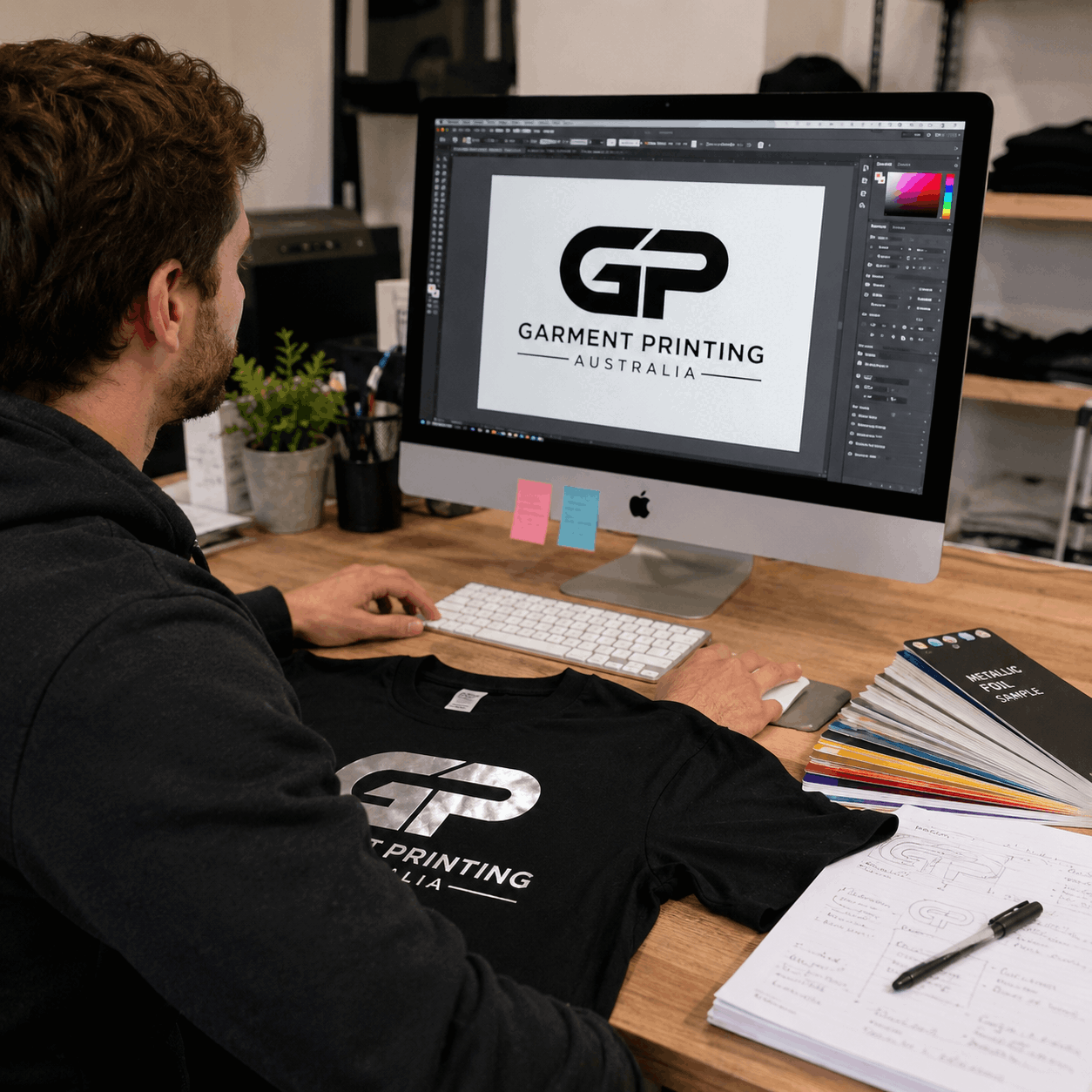
Prepare Your Artwork

We review your design and identify the areas that will receive the metallic foil. Bold, clearly defined artwork generally produces the strongest results.

garmentprinting

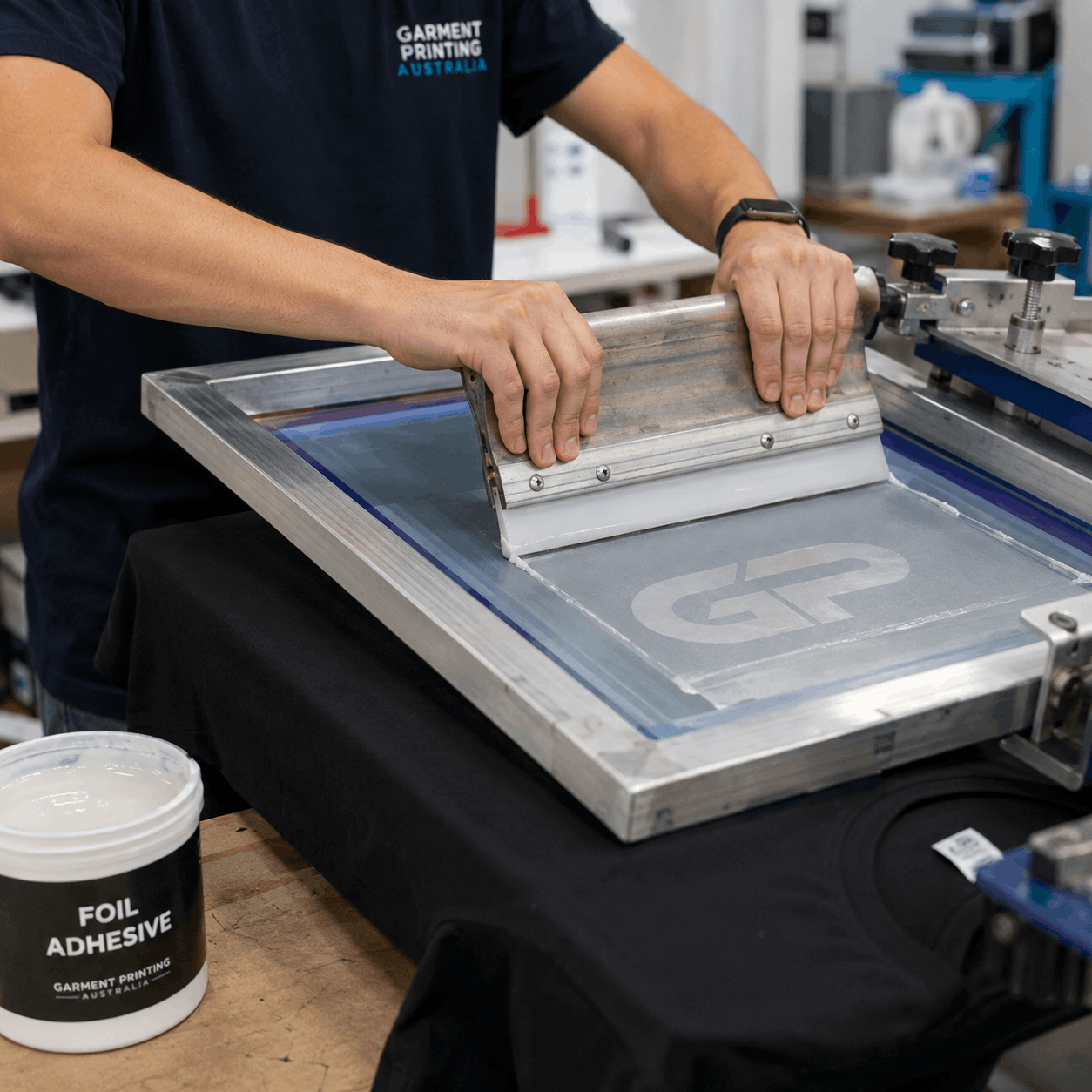
Screen Print the Adhesive

A specialised foil adhesive is screen printed onto the garment in the exact shape of your design, then cured. This creates the foundation that allows the foil to bond cleanly to the artwork.

image-missing

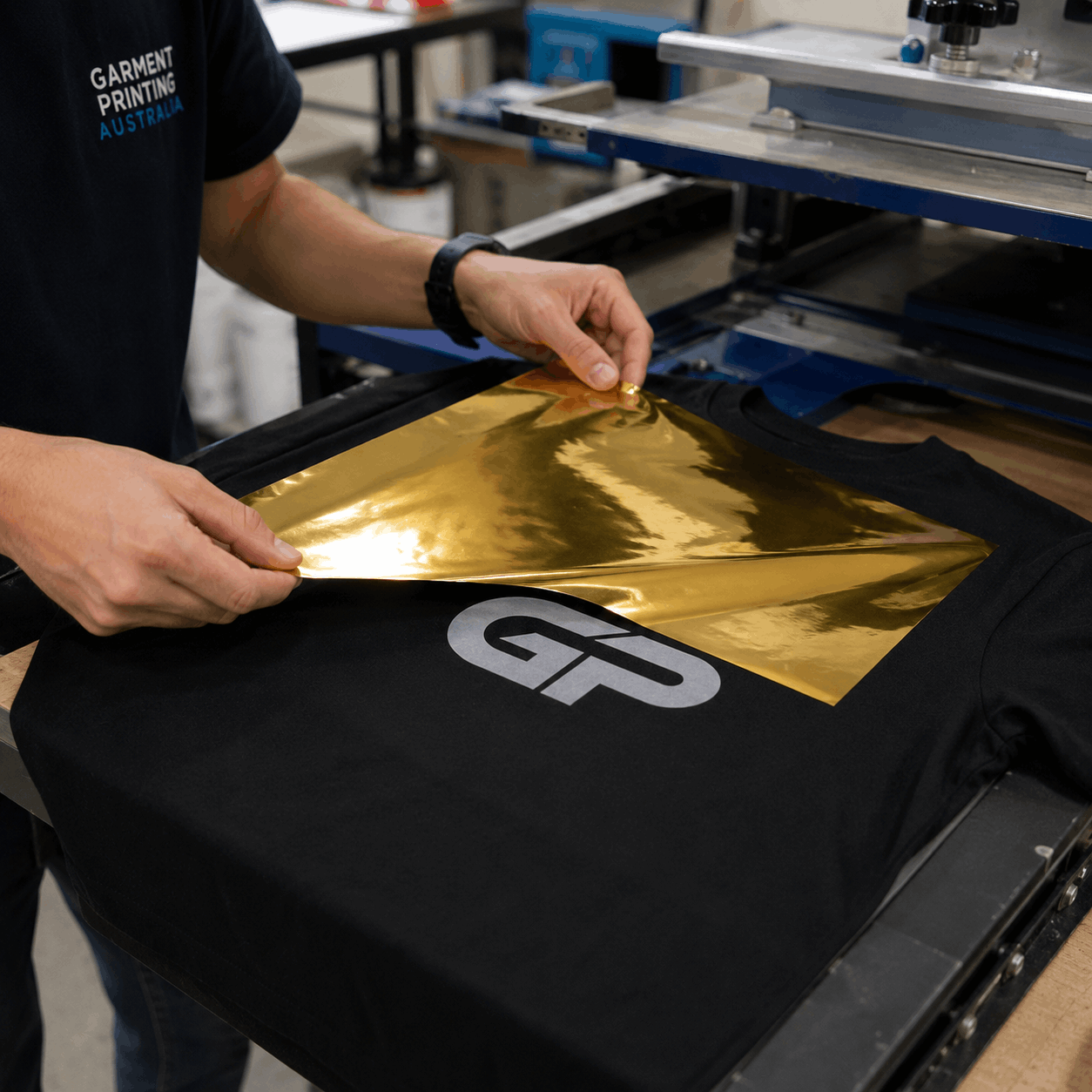
Position the Foil

The selected metallic foil is placed over the prepared print area.

image-missing

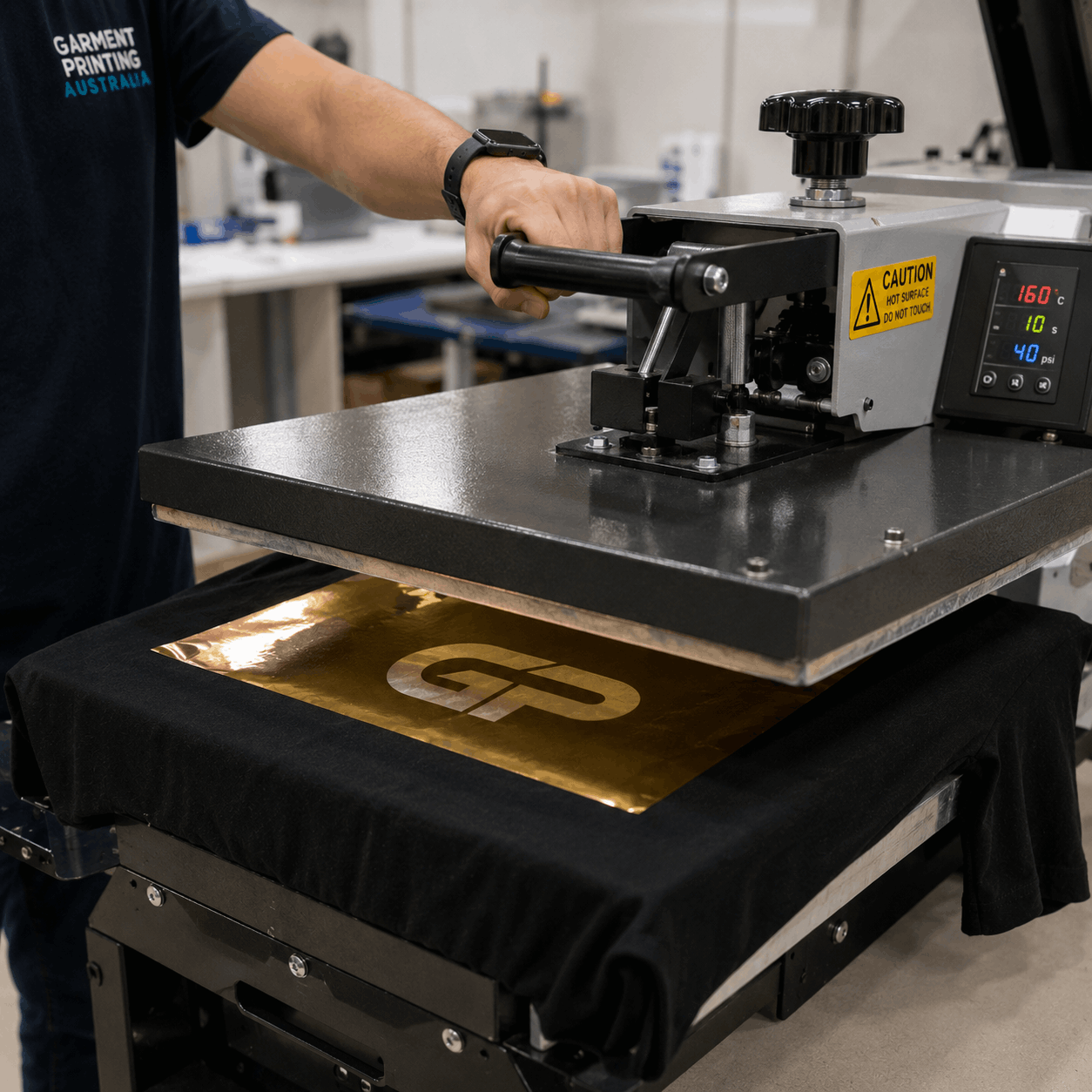
Applying Heat and Pressure

Heat and pressure activate the adhesive and transfer the foil onto the required sections of the artwork.

image-missing

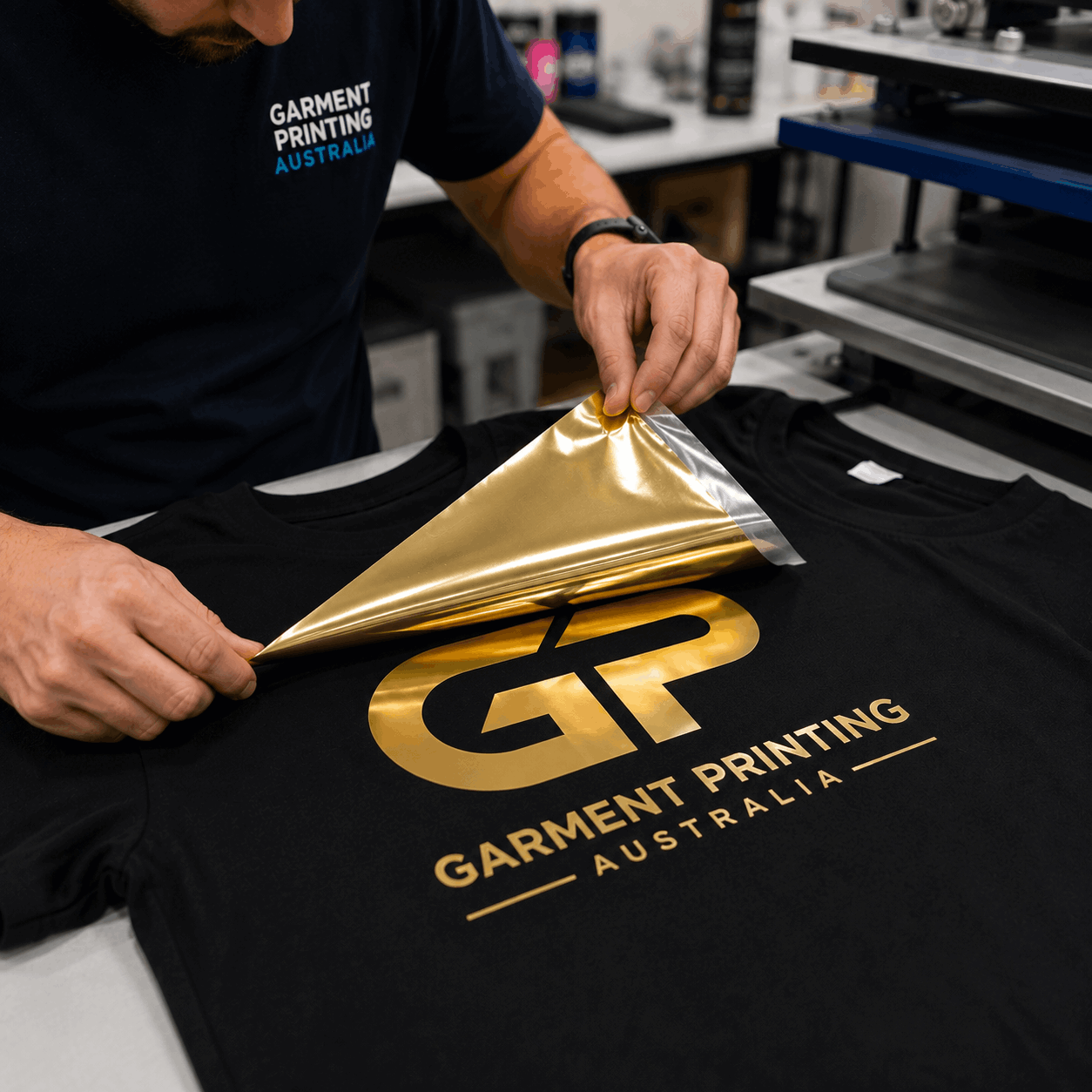
Revealing the Design

Once the transfer has been completed correctly, the carrier foil is removed, leaving the metallic finish attached to the design.

image-missing

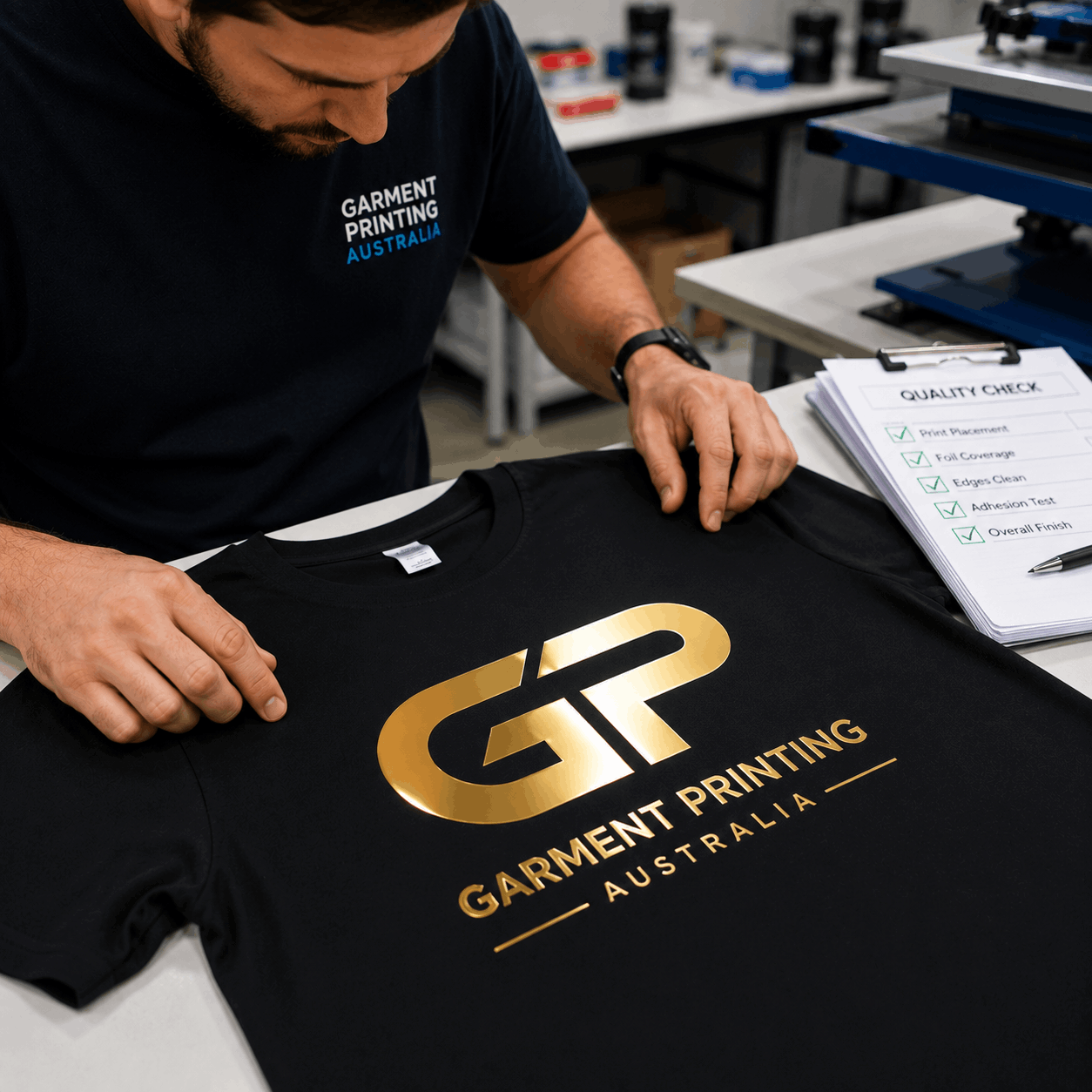
Quality Check

The finished garment is inspected for coverage, placement and overall print quality before your order progresses.

See what Metallic Printing sets apart from other Printing Methods

Advantages of Foil Printing

Dollar Card Icon

Premium Brand Presentation

Metallic details can elevate relatively simple artwork and create a more considered, premium appearance.

Excellent for Feature Details

You don't necessarily need to foil the entire design. Metallic elements can be used selectively to highlight names, logos, borders or important graphic details.

High Visual Impact

The reflective surface catches light and helps selected parts of your artwork stand out.

Works on Different Garments

Depending on the fabric and artwork, foil can be applied to a range of apparel including tees, hoodies and sweatshirts.

Distinctive Metallic Effect

Achieve a finish that conventional flat-colour printing cannot fully reproduce.

Creative Design Possibilities

Gold, silver, and other available foil finishes give designers another way to introduce texture, contrast and movement into garment artwork.


Potential Limitations of Metallic Printing

What are the Possible Disadvantages?

  • Because the metallic layer sits on the surface of the garment, it can be prone to cracking in high-movement areas (like underarms or sleeves) and may flake at fold lines over time, particularly with frequent washing or tumble drying.
  • Foil also isn't the best match for stretchy or performance fabrics, as flex and movement can weaken adhesion and shorten the life of the finish.
  • The fabric, garment construction, print location and artwork can all affect suitability.
garmentprinting

Some amazing prints produced using Foil Printing

Metallic Printing Examples

Frequently Asked Questions

Foil printing is a garment decoration method that applies a thin metallic foil layer to selected areas of a design. The result is a reflective surface that creates a much stronger metallic appearance than a standard flat-colour print.

No. Metallic ink contains particles designed to produce a metallic-looking colour, while foil creates a separate reflective surface on top of the garment. This generally gives foil its distinctive mirror-like shine.

Gold and silver are among the most popular options. Other metallic colours and finishes may also be available depending on the requirements of your project. Ask our team about current options when requesting a quote.

Foil works best on stable, low-stretch fabrics like cotton and cotton-blend tees, hoodies and sweatshirts. It's generally not recommended for highly stretchy or performance fabrics such as spandex blends or moisture-wicking activewear, as these can affect how well the foil adheres and holds up over time. We can confirm suitability once you've selected your garment.

Yes. Foil tends to really pop against darker garments, as the contrast makes the metallic shine more prominent. On lighter garments, foil creates a softer, more subtle reflective effect. Coverage and opacity can also vary slightly depending on the base colour, so it's worth sending us your garment colour and artwork so we can advise on the best result.

Yes. Foil can work particularly well for company logos when you want a more decorative or premium result. Artwork with clear shapes and defined areas generally produces the best effect.

Yes, subject to the garment and artwork being suitable. Gold foil against black is a popular combination because the contrast makes the reflective metallic finish particularly noticeable.

Depending on the artwork and garment, foil may be incorporated alongside other decoration techniques. Our team can advise on the most practical production method for the effect you're trying to achieve.

Foil printing holds up well with the right care, but as a surface-applied finish, it's not as hard-wearing as screen printing or embroidery. Repeated washing, tumble drying and stretching can cause cracking or flaking, especially in high-movement areas. With gentle care, foil can stay looking sharp for a long time.

Follow the garment and print care instructions supplied with your order. In general, gentle washing, avoiding excessive heat and treating the printed surface carefully will help preserve the metallic finish.

Foil generally performs best on bold, clearly defined design elements. Very fine lines, tiny text and highly intricate artwork may need to be adjusted before production.

Yes. Send us your design, and our team can review whether it is suitable for foil printing and advise if any adjustments are required.

Yes. Garment Printing provides custom foil printing for business apparel, merchandise, events, promotions and other quantity requirements. Send us your garment, artwork and quantity requirements for an accurate quote.

Turnaround depends on order size, garment availability and artwork complexity. As a general guide, most orders are completed within 7 to 14 business days.

Yes, our minimum order for foil printing is 20 units. Get in touch with your artwork and quantity requirements, and we'll confirm the best option for your order.

The best printing method depends on the effect you want, the artwork, garment, quantity and intended use. Foil printing is ideal when a reflective metallic appearance is an important part of the design. Screen printing is well suited to larger-volume orders and strong spot colours, while DTF and DTG are useful for detailed or full-colour artwork. Embroidery creates a textured stitched finish and is commonly used for uniforms, polos, caps and corporate branding.

Not sure which option suits your artwork? Send us the design and tell us what you're trying to achieve. We'll help you choose an appropriate decoration method.

Garment Printing is committed to providing the highest quality to our customers

Request a Quote

Tell us what you'd like to create, and our team can help you choose a suitable garment, review your artwork and determine the best way to produce the metallic effect. For an accurate quote, send us your preferred products, quantities, garment colours, artwork, required print locations and preferred foil finish. We'll review the details and recommend the most suitable production approach for your project.

Your cart is empty
Search